Research Library
Evidence-led guides, paper breakdowns, research methods, and practical engineering workflows across radar, signal processing, artificial intelligence, and related fields.
-
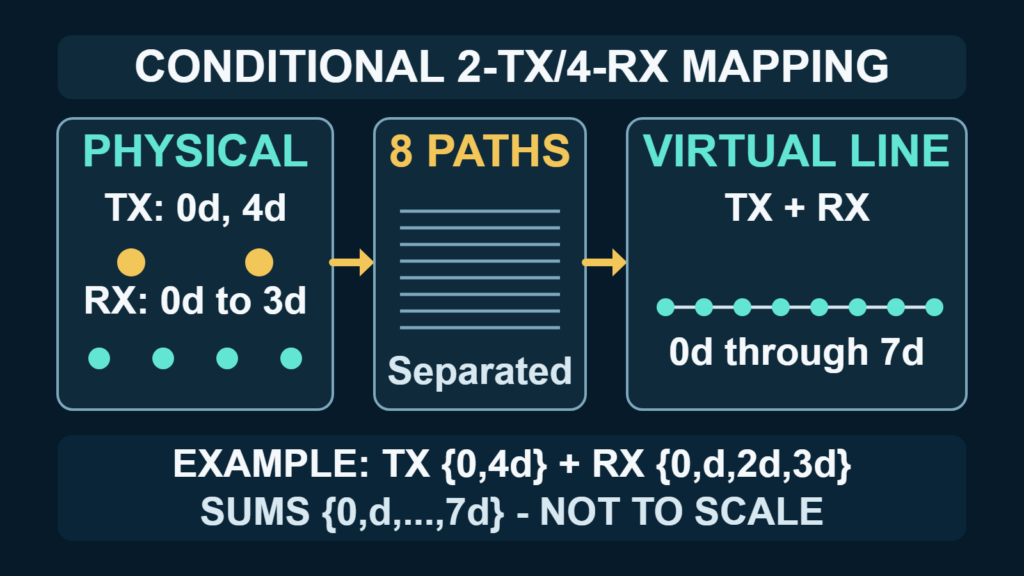
How MIMO Radar Builds a Virtual Array: Geometry, Math, and TDM Traps
See how separable transmitter echoes and receiver channels create virtual spatial samples, then audit a 2-TX/4-RX array, distinguish pair count from useful aperture, and diagnose…
-
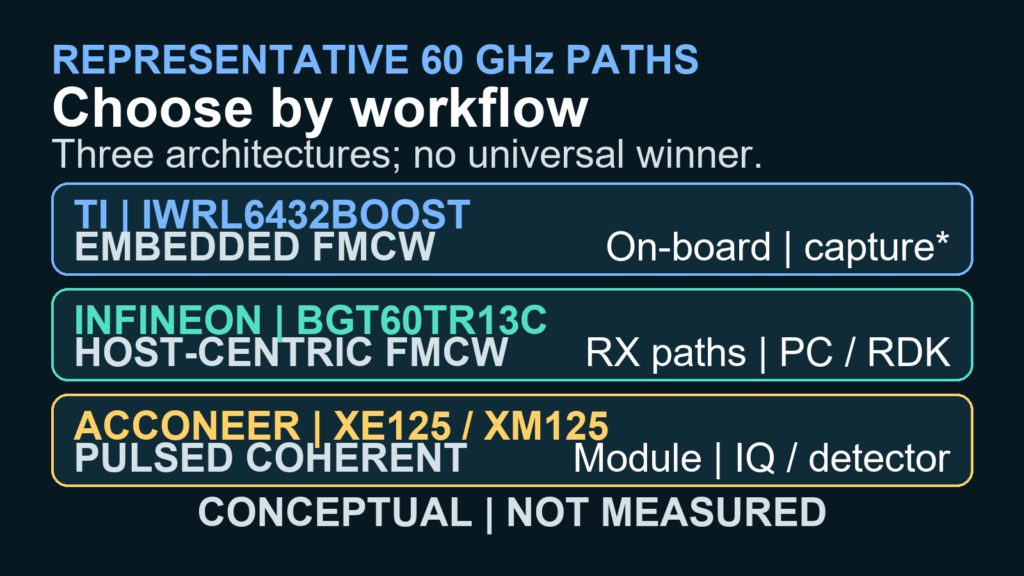
Representative 60 GHz Platforms: TI IWRL6432BOOST, Infineon DEMO BGT60TR13C, and Acconeer XE125/XM125
How do TI, Infineon and Acconeer compare for 60 GHz radar sensing? This guide examines sensing methods, bandwidth, antenna configurations, data access and development tools…
-
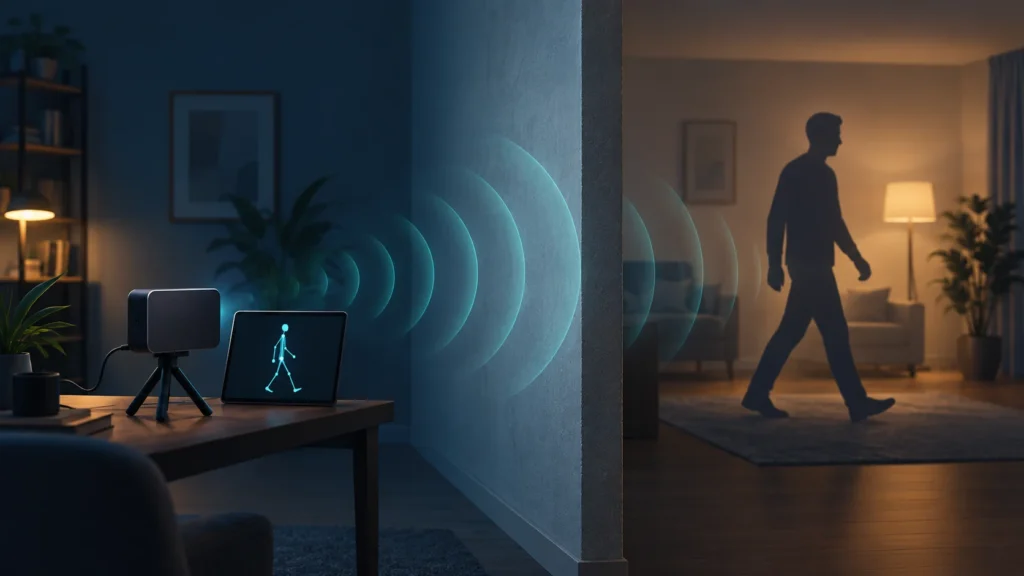
Can RF See People Through Walls? What RF-Pose Actually Demonstrated
How can radio reflections reveal a person’s pose behind a wall? This RF-Pose breakdown explains the learning method, evaluation evidence, signal limitations and questions researchers…
-
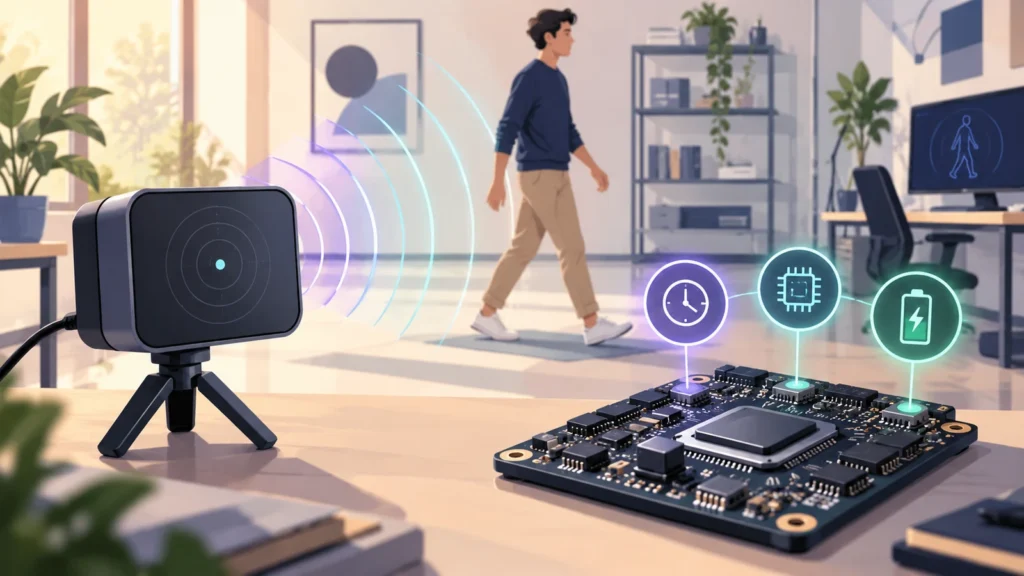
Can Radar-HAR Run on the Edge? A Guide to Latency, Memory and Power
Radar-HAR can run on edge devices, but model size and inference speed tell only part of the story. Learn to budget observation time, processing delay,…
-
Why 98% Radar-HAR Accuracy May Be Misleading: Subject Leakage, Splits and Domain Shift
A high radar-HAR score is only as useful as its evaluation protocol. Learn how subject leakage, overlapping windows, preprocessing and domain shift change what accuracy…
-
Can Radar Replace Cameras for Human Monitoring? An Evidence-Led Comparison
Radar can replace cameras for some monitoring tasks, but the evidence depends on the measurement, training and deployment conditions. Compare primary research, privacy trade-offs and…
-
How to Collect a Radar-HAR Dataset Without Ruining the Experiment
A practical guide to collecting radar-HAR data that supports credible results, with participant and room coverage, timing checks, capture quality control, independent splits and a…
-
CFAR Is Not One Algorithm: Choosing CA-, GO-, SO- and OS-CFAR
CFAR is a family of adaptive detectors. Learn when CA, GO, SO and OS work, where they fail, and why every method needs its own…
-
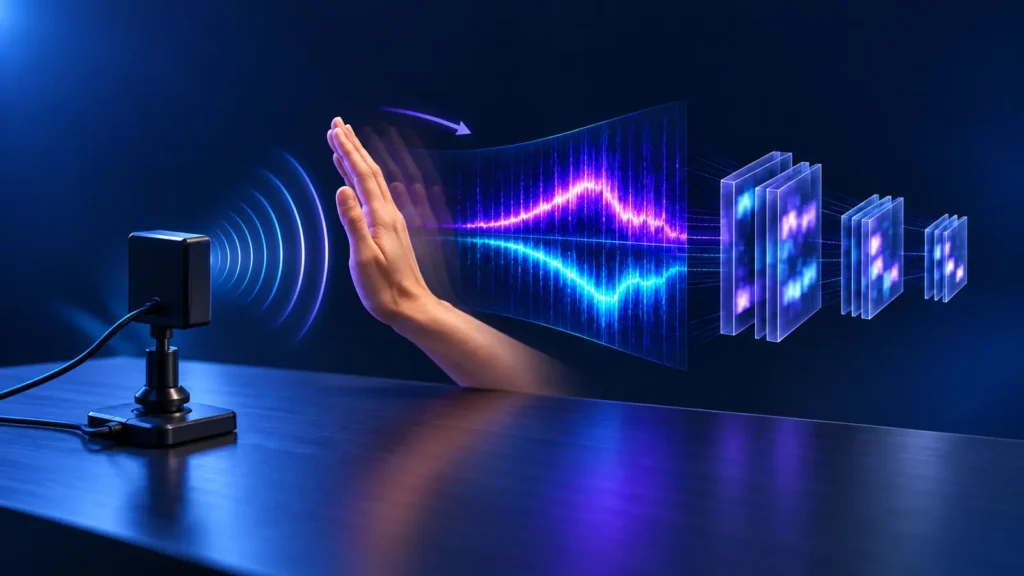
When CNNs Learned Micro-Doppler Gestures: Revisiting a Classic Radar Study
A 2016 study showed that a small CNN could classify ten hand gestures from 5.8 GHz micro-Doppler spectrograms. Its angle and unseen-user failures reveal more…
-
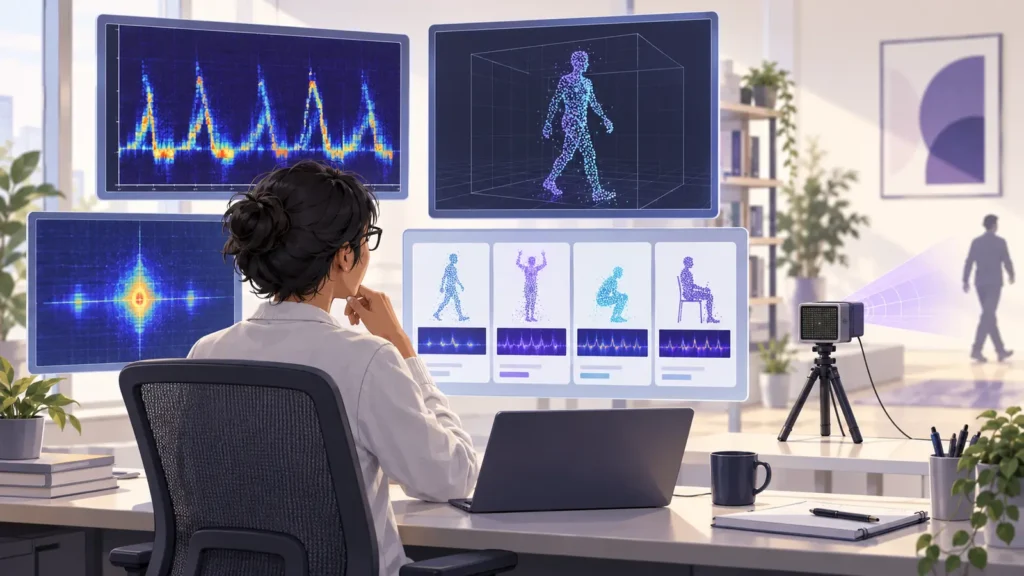
Which Radar-HAR Dataset Should You Use? A Researcher’s Comparison
A representation-first comparison of major radar-HAR datasets, covering signal level, activities, participants, environments, evaluation splits, access, licensing, and the research questions each dataset can—and cannot—answer.
-
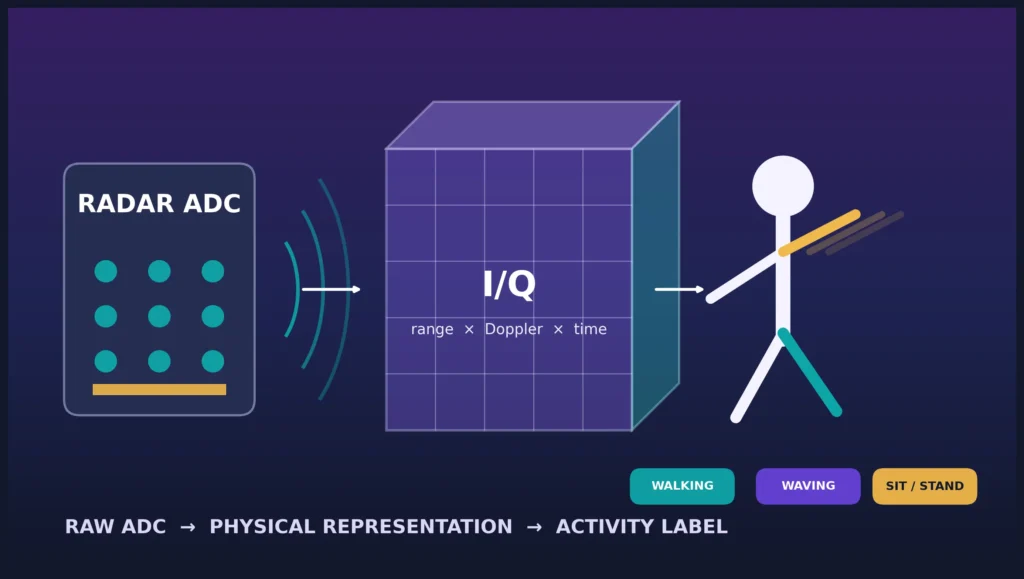
From Raw ADC Samples to Activity Labels: Build a Radar-HAR Pipeline
A reproducible, code-backed path from radar bytes to group-aware activity recognition—with calibrated axes, honest labels and tests for the failures that inflate results.
-
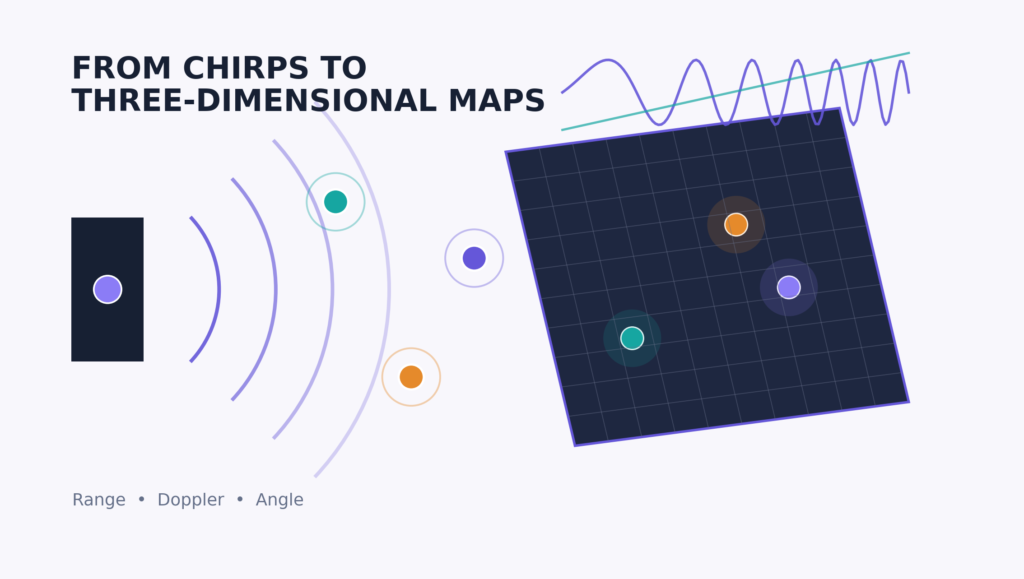
From Chirps to Range–Doppler–Angle Maps: The Mathematics of FMCW Radar
FMCW radar estimates range, radial velocity and angle from three phase progressions in one complex data cube. This guide derives every axis and verifies the…