FMCW radar
-
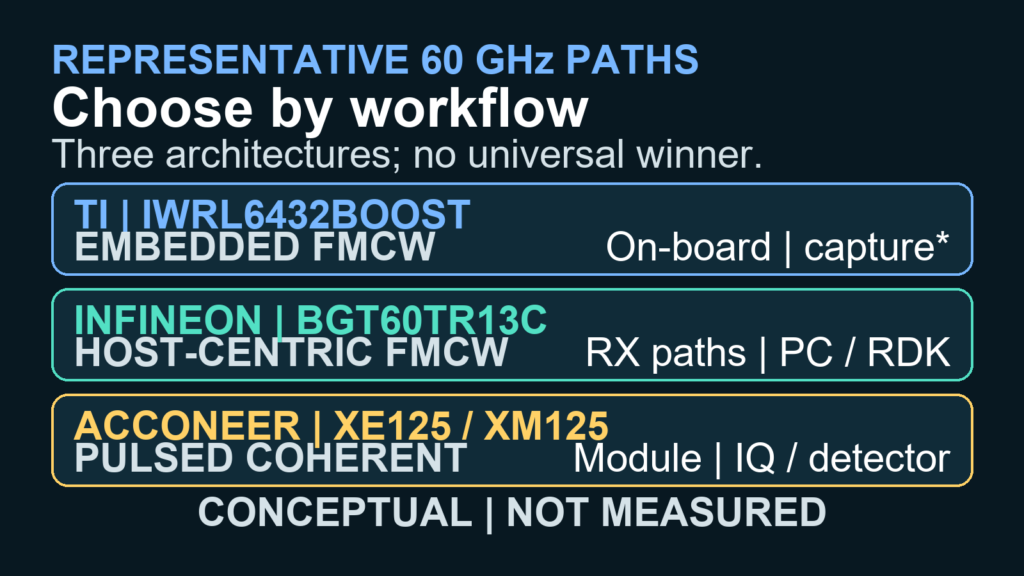
Representative 60 GHz Platforms: TI IWRL6432BOOST, Infineon DEMO BGT60TR13C, and Acconeer XE125/XM125
How do TI, Infineon and Acconeer compare for 60 GHz radar sensing? This guide examines sensing methods, bandwidth, antenna configurations, data access and development tools…
-
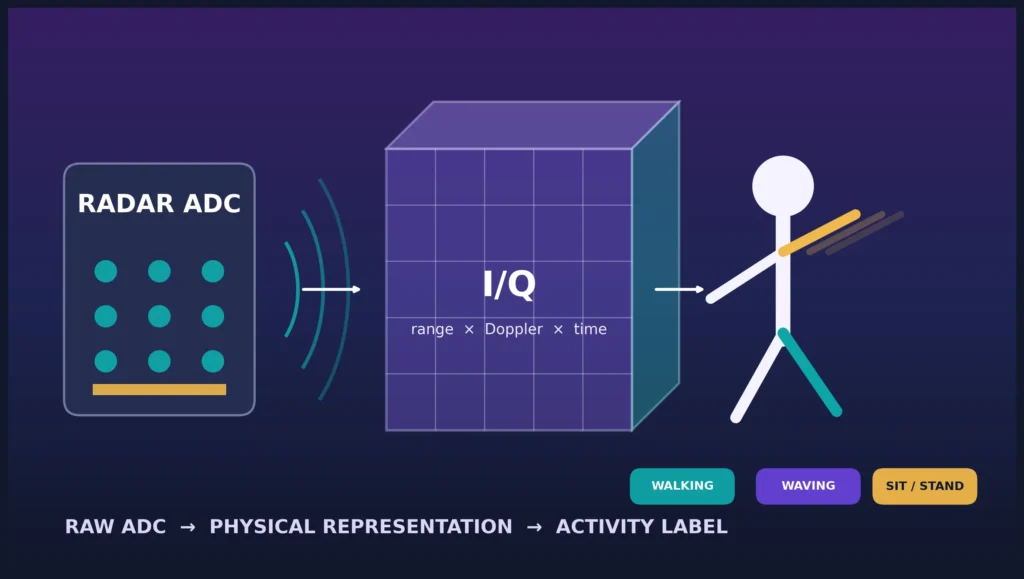
From Raw ADC Samples to Activity Labels: Build a Radar-HAR Pipeline
A reproducible, code-backed path from radar bytes to group-aware activity recognition—with calibrated axes, honest labels and tests for the failures that inflate results.
-
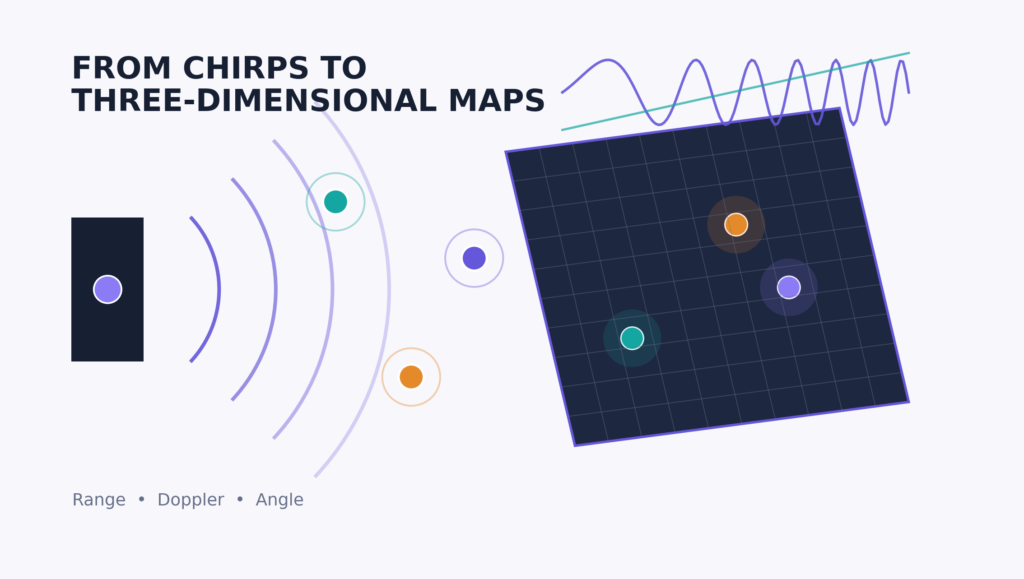
From Chirps to Range–Doppler–Angle Maps: The Mathematics of FMCW Radar
FMCW radar estimates range, radial velocity and angle from three phase progressions in one complex data cube. This guide derives every axis and verifies the…
-

24, 60, or 77 GHz? How to Choose a Radar for Human Sensing
Compare 24, 60, and 77 GHz radar for human sensing, including bandwidth, antennas, motion sensitivity, regulations, and raw-data access.
-

Why Your Radar Spectrogram Looks Wrong: Choosing STFT Parameters for Micro-Doppler
Window length—not FFT size—is the main control on the STFT time–Doppler trade-off. This practical guide explains how PRF, overlap, window shape and zero-padding affect radar…
-

Radar-Based Human Activity Recognition: What Researchers Need to Know Before Starting
A practical guide to radar-based human activity recognition, covering radar modalities, signal representations, dataset design, leakage-free evaluation, model selection, and deployment challenges researchers should consider…