micro-Doppler
-
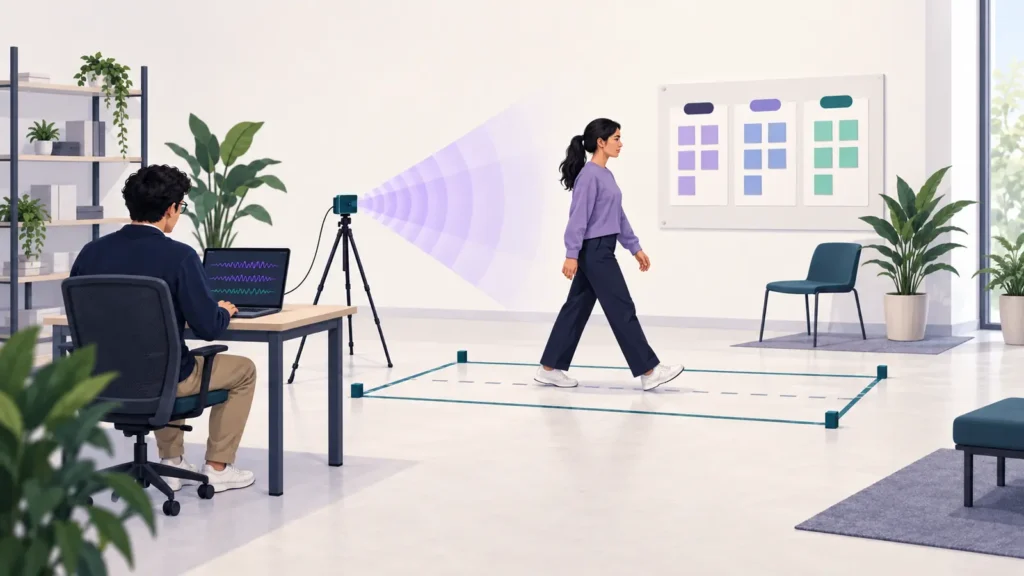
How to Collect a Radar-HAR Dataset Without Ruining the Experiment
A practical guide to collecting radar-HAR data that supports credible results, with participant and room coverage, timing checks, capture quality control, independent splits and a…
-
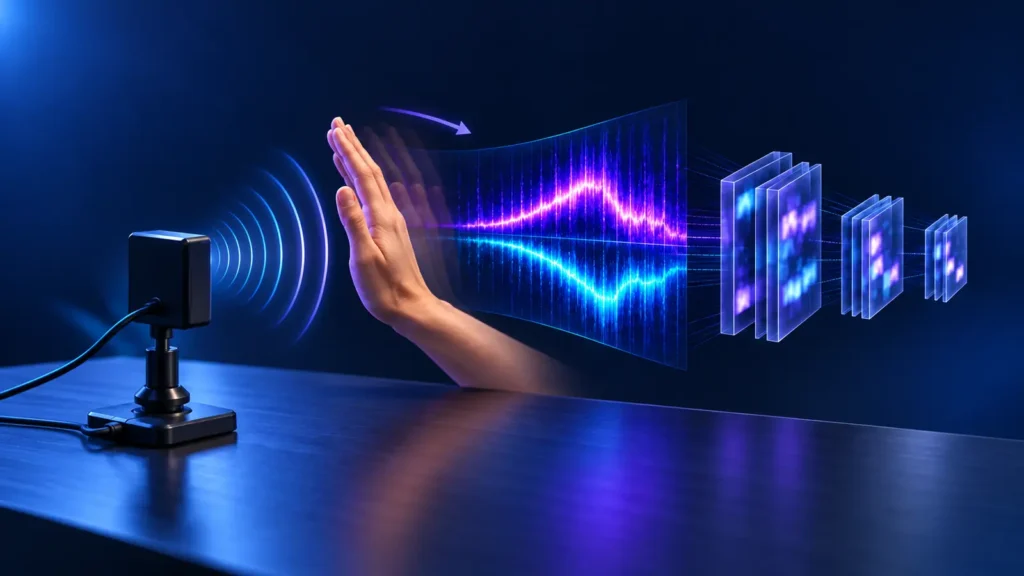
When CNNs Learned Micro-Doppler Gestures: Revisiting a Classic Radar Study
A 2016 study showed that a small CNN could classify ten hand gestures from 5.8 GHz micro-Doppler spectrograms. Its angle and unseen-user failures reveal more…
-
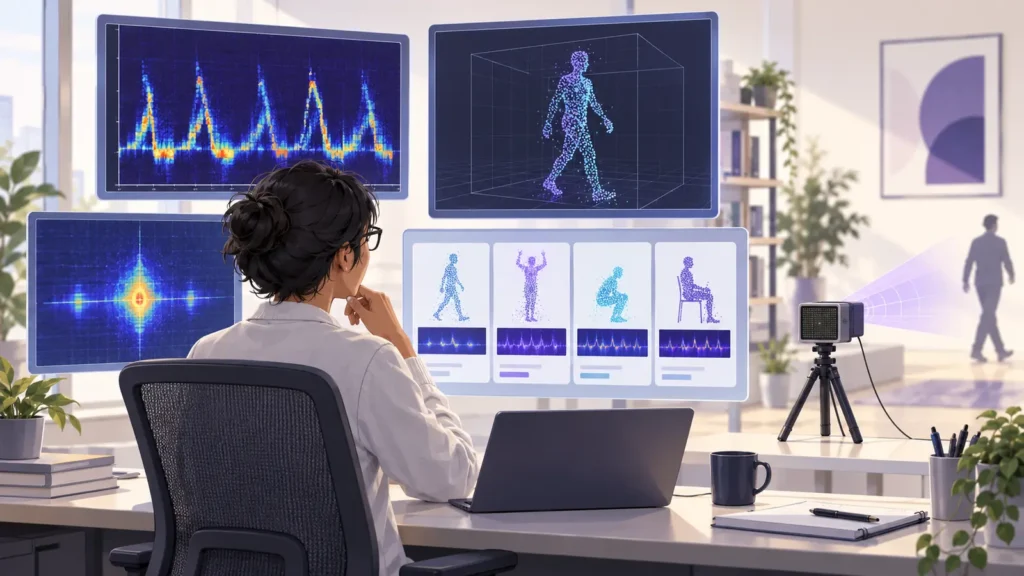
Which Radar-HAR Dataset Should You Use? A Researcher’s Comparison
A representation-first comparison of major radar-HAR datasets, covering signal level, activities, participants, environments, evaluation splits, access, licensing, and the research questions each dataset can—and cannot—answer.
-

Micro-Doppler Explained: How Radar Sees Arms, Legs, and Human Motion
Micro-Doppler reveals how torso and limb velocities change over time. This physics-first guide explains human radar signatures, spectrogram interpretation, sampling limits, common mistakes, and a…
-

Why Your Radar Spectrogram Looks Wrong: Choosing STFT Parameters for Micro-Doppler
Window length—not FFT size—is the main control on the STFT time–Doppler trade-off. This practical guide explains how PRF, overlap, window shape and zero-padding affect radar…
-

Radar-Based Human Activity Recognition: What Researchers Need to Know Before Starting
A practical guide to radar-based human activity recognition, covering radar modalities, signal representations, dataset design, leakage-free evaluation, model selection, and deployment challenges researchers should consider…